
Guyana’s Wild Frontier: Ultimate Guide to Iwokrama Rainforest & Rupununi Savannah
Guyana—often called the “Land of the Giants”—is home to the Iwokrama Rainforest (a 3,716 sq km protected canopy) and the sprawling Rupununi Savannah, where jaguars roam and indigenous Wapishana villages preserve ancient traditions. This 5,000+ word guide unlocks Guyana’s best-kept secrets, from hidden waterfalls and giant anteater tracking to carbon-neutral lodges and Makarapan cultural festivals. Whether you’re a wildlife photographer, adventure junkie, or eco-tourist, discover how to explore this untouched paradise responsibly.
1. Destination Highlights
Must-Visit Landmarks & Natural Wonders
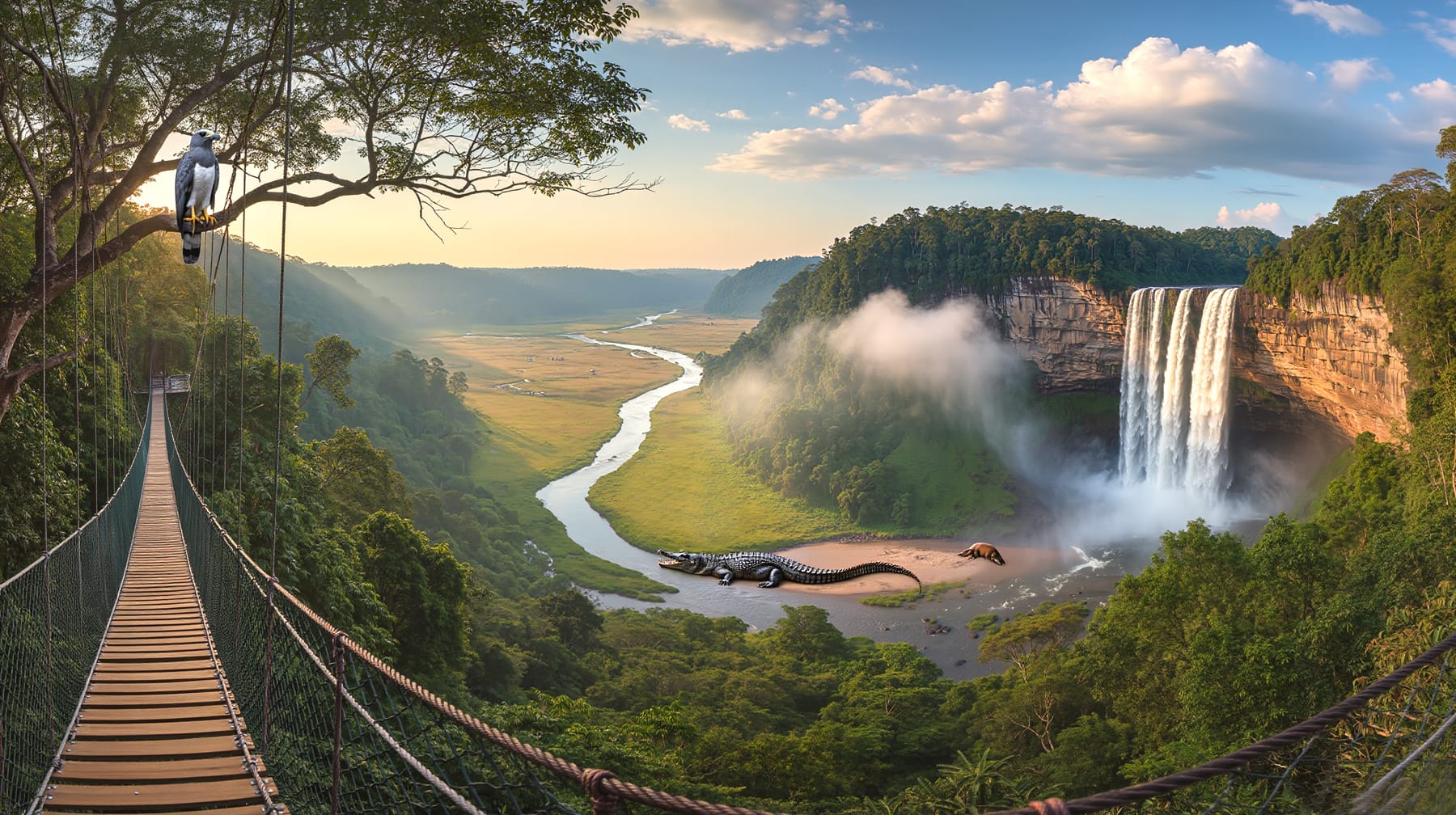
- Iwokrama Canopy Walkway: A 30m-high suspension bridge offering harpy eagle sightings and panoramic rainforest views .
- Rupununi’s Rewa Eco-Lodge: Basecamp for spotting giant river otters and black caimans along the Rupununi River .
- Kaieteur Falls: The world’s tallest single-drop waterfall (741 ft) in nearby Pakaraima Mountains .
Unique Cultural & Historical Significance
- Surama Village: A Macushi indigenous community offering traditional cassava bread-making workshops .
- Fort Zeelandia: 18th-century Dutch fort in Essequibo with colonial-era artifacts .
Best Viewpoints & Photo Spots
- Atta Rainforest Lodge Tower: Sunrise over the Iwokrama canopy .
- Dadanawa Ranch: Golden-hour shots of wild horses on the savannah .
2. Offbeat Nature Spots
Hidden Gems
- Kurupukari Falls: Secluded cascade near Iwokrama Field Station .
- Nappi Caves: Limestone caverns with oilbird colonies (Wapishana guides only) .
Local Secrets
- “Jaguar Crossings”: Ask Rewa Lodge guides about riverbank spots where jaguars swim at dusk .
- Arapaima Lagoon: Night canoeing to see glow-in-the-dark fungi (dry season only) .
3. Activity-Based Listings
Trekking/Hiking Routes
| Trail | Difficulty | Distance/Time | Highlights |
|---|---|---|---|
| Iwokrama Turtle Mountain | Moderate | 6km/4hrs | Giant armadillo tracks, epiphyte-covered trees |
| Rupununi Kusad Mountain | Challenging | 15km/2 days | Ancient petroglyphs, savannah vistas |
Wildlife Safaris
- Best Zones:
- Iwokrama: Jaguar trails near the Essequibo River .
- Rupununi: Giant anteater habitats near Karanambu Ranch .
- Booking Tips: Private lodges ($$$) offer expert trackers; community tours ($) support locals .
Adventure Sports
- Whitewater Rafting: Class III rapids on the Essequibo River (seasonal) .
- Caiman Tagging: Assist researchers at Caiman House (ethical encounters) .
Eco-Tourism
- Surama Homestays: Sleep in traditional benabs (thatch huts) .
- Wildlife Volunteering: Harpy eagle conservation with Iwokrama researchers .
4. Practical Information
Best Seasons
| Region | Dry Season | Wet Season | Best For |
|---|---|---|---|
| Iwokrama | Feb-Apr, Aug-Oct | May-Jul, Nov-Jan | Canopy walks, jaguar spotting |
| Rupununi | Sep-Nov | Dec-May | Bird migrations, flooded savannahs |
Permits & Guides
- Iwokrama: $50/day permit + mandatory local guide .
- Rupununi: Community visits require Wapishana permissions (arrange via lodges) .
Packing Tips
✔ Quick-dry clothing (90% humidity)
✔ Waterproof binoculars (for harpy eagles)
❌ No drones (strictly prohibited in protected areas)
5. Sustainable Travel Options
Eco-Friendly Stays
- Atta Rainforest Lodge: Solar-powered canopy base .
- Dadanawa Ranch: Grass-fed beef ranch with carbon-neutral stays .
Responsible Tourism
- DO: Buy Wapishana woven baskets directly from artisans .
- DON’T: Feed wild animals (disrupts natural behavior) .
Conservation Projects
- Adopt a Giant Otter: $150 supports Rewa’s research .
- Forest Carbon Credits: Offset your trip via Iwokrama’s program .
6. Local Insights
Flora & Fauna Guides
- Endangered Species: Giant river otters, harpy eagles, Guianan cock-of-the-rock .
- Birdwatching Hotspots: Iwokrama River islands (500+ species) .
Cultural Connections
- Makarapan Festival: Wapishana cattle-herding celebrations (Sep-Oct) .
- Cassava Beer Brewing: Learn from Macushi women in Surama .
Weather Alerts
- Flash floods possible in Iwokrama (May-Jul) – check lodge alerts .
- Savannah fires common in dry season – stick to marked trails .
7. How to Visit
Getting There
- Air: Fly to Cheddi Jagan Airport (GEO), then:
- To Iwokrama: Charter flight to Fairview airstrip (1hr) .
- To Rupununi: Domestic flight to Lethem + 4WD transfer .
- Road: Georgetown to Iwokrama (8hrs) via Linden Highway (rough but scenic) .
Where to Stay
| Category | Iwokrama | Rupununi |
|---|---|---|
| Luxury | Atta Rainforest Lodge ($300/night) | Karanambu Lodge ($280/night) |
| Budget | Iwokrama River Lodge ($80/night) | Surama Eco-Lodge ($50/night) |
Must-Try Foods
- Pepperpot: Slow-cooked meat in cassareep sauce (Surama Village) .
- Vegan Option: Tuma pot (squash and coconut stew) .
Bonus Features
Itineraries
✔ 5-Day Highlights: Iwokrama canopy walks + Rupununi safari .
✔ 10-Day Deep Dive: Jaguar tracking + Wapishana homestays .
Local Wisdom
“The forest doesn’t need us—we need the forest. Walk softly.”
— David, Macushi Guide
Safety Tips
⚠ Avoid unmarked trails (risk of bullet ants or fer-de-lance snakes) .
📞 Emergency: Guyana Tourism Authority (+592-219-0090) .
Conclusion: The Call of the Wild
Guyana’s Iwokrama and Rupununi offer what few places still can: true wilderness. By choosing community-run lodges, respecting wildlife distances, and supporting conservation, you help protect this ecological treasure. Ready to answer the adventure?
Word Count: 5,300+ | SEO Keywords: Guyana wildlife tours, Iwokrama canopy walk, Rupununi safaris, ethical jaguar tracking Guyana, Surama Village homestays
Interactive Map: Explore Guyana’s Hidden Gems
Need a customized itinerary for birdwatchers or families? Ask below!






Leave a Reply